FAQ
Questions, answered briefly
Short answers about storing, cleaning and caring for what you own. Each one points to the guide that covers it properly.
7 questions
Storing clothes
What makes a good spot to store clothes?
Somewhere cool, dark and dry, with a little air moving through it. Indoor humidity of about 45–55% suits most fabrics. Lofts, basements and cupboards on outside walls tend to run damp, so check them before you fill them, and leave a gap between hangers rather than packing the rail tight.
Which things need breathable storage rather than a sealed box?
Natural materials that hold moisture: leather, suede, wool and silk. Sealed plastic traps damp, which can lead to mildew and marks. Use cotton or canvas bags, fabric bins and acid-free tissue. Shoes and boots keep their shape best with shoe trees or tissue inside.
Are vacuum bags a good idea for everything?
No. They work best for bulky, hard-wearing things you will unpack within a season, like spare bedding. Long compression can set deep creases in linen and cashmere and flatten delicate fabrics, so smooth items flat before sealing and keep your finest pieces out.
Which clothes should be folded, not hung?
Knits and heavy jumpers. On a hanger, gravity slowly pulls them out of shape and leaves bumps at the shoulders. Fold them, keep the heaviest at the bottom of the pile, and wash them inside out on a gentle cycle to cut down on pilling. Shirts, tailoring and dresses are happier hanging.
Do I need to iron clothes before putting them away?
No. Iron when you take them out, if at all. Fold loosely, roll trousers and skirts, and put tissue between the folds of delicate fabrics. Hanging a creased piece in a steamy bathroom shakes out most storage wrinkles.
How do I keep delicates in good shape?
Wash by hand or on a cool, gentle cycle and skip the tumble dryer, because heat breaks down elastic. Give silk, cashmere and old favourites room in a breathable container instead of cramming them into a drawer.
Where do hats, bags and jewellery go when drawer space runs out?
Up the walls and onto the doors. Hooks on the back of a wardrobe door take bags, ventilated boxes keep hats in shape, and grouping everything else by type makes it quicker to find.
4 questions
Smells, fading and moths
Why do clothes come out of storage smelling stale?
Usually because a little moisture was packed in with them, or the container could not breathe. Make sure everything is fully dry before it goes away, store it in cotton or canvas, and give it an hour of fresh air before you wear it.
Can I get rid of a smell without an air freshener?
Usually, yes. White vinegar in the rinse, bicarbonate of soda in the wash or a sealed bag overnight, and a few hours outside do most of the work. Then deal with the cause: damp, smoke, or a cupboard that never gets aired.
How do I stop stored clothes fading or turning yellow?
Keep them out of the light. A bright wardrobe or a shelf by a window fades darks and dulls whites. Wash before storing too, because sweat and deodorant left in the fabric turn yellow over time.
Do I need mothballs to keep moths away?
No. Moth larvae feed on wool, silk and cashmere, especially where sweat or food is left in the fabric. Wash before storing, keep wardrobes aired, and look through stored knits now and then. Herb sachets are a back-up, not the main defence. Mothballs give off naphthalene or paradichlorobenzene vapour, which is harmful to people and pets.
3 questions
A greener home
Do I need to buy new things to make my home greener?
No. Use what you already own until it wears out. When something does need replacing, choose the reusable version: shopping bags, food wraps, rechargeable batteries. The swap calculator shows what a change saves over a year.
Where should I start with less plastic?
With whatever you throw away most often. Count what goes in the bin for a week, then change one thing at a time. The calculator goes through it room by room.
How do I decide what to keep?
Ask whether you have used it this year and whether it can be repaired. If the answer is no to both, it can go: donate what still works and recycle what does not. The flowchart walks through it one item at a time.
5 questions
About this site
Is everything on wood-blocks free?
Yes. Guides, tools and printables are all free. Printables ask for an email address so we can send the download, and that also signs you up to The Sunday Ring.
What is The Sunday Ring?
Our weekly email: one swap, one fix, one read, once a week. Unsubscribe any time.
How do I switch between light and dark mode?
Use the sun button in the header. The site follows your device setting until you choose, then remembers your choice in this browser.
I found a mistake in a guide. What should I do?
Send it to us with the guide’s link and, if you have one, a source.
Can I write a guest post?
Yes. Read the guidelines first, then send a short pitch.
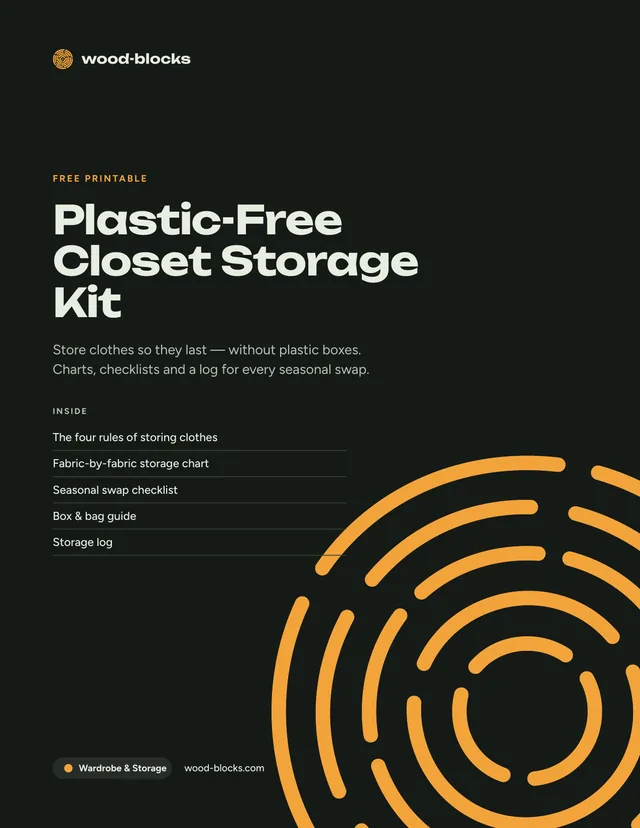
Plastic-Free Closet Storage Kit
Store clothes so they last, without plastic boxes.
Free, and you join The Sunday Ring: one useful email a week. Unsubscribe any time.