
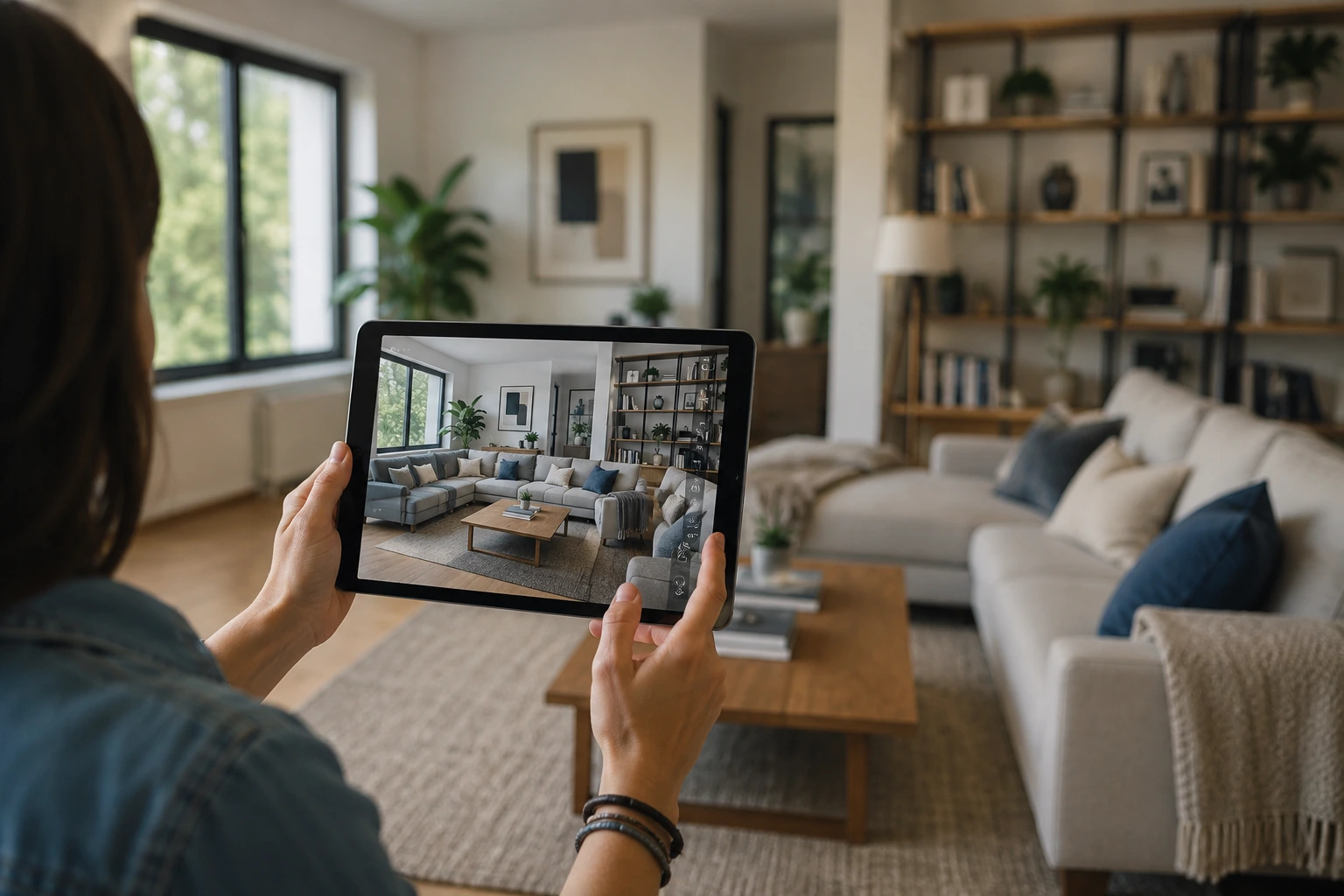
Artificial intelligence is transforming the way people think about home design. In the past, a designer’s work demanded sketches, mood boards, trips to stores, and consultations with industry professionals. But now all that is needed to begin designing is a photo of a room along with preferences entered into an AI-related tool.
Now, homeowners, tenants, designers, and furniture retailers can take advantage of AI to find better arrangements, see what styles will look like, choose colors, and arrange the space the most efficiently. The introduction of these devices does not mean a decrease in creativity but rather helps people test ideas quicker and allows them to make better choices before making purchases or performing renovations.

What is AI-powered home design?
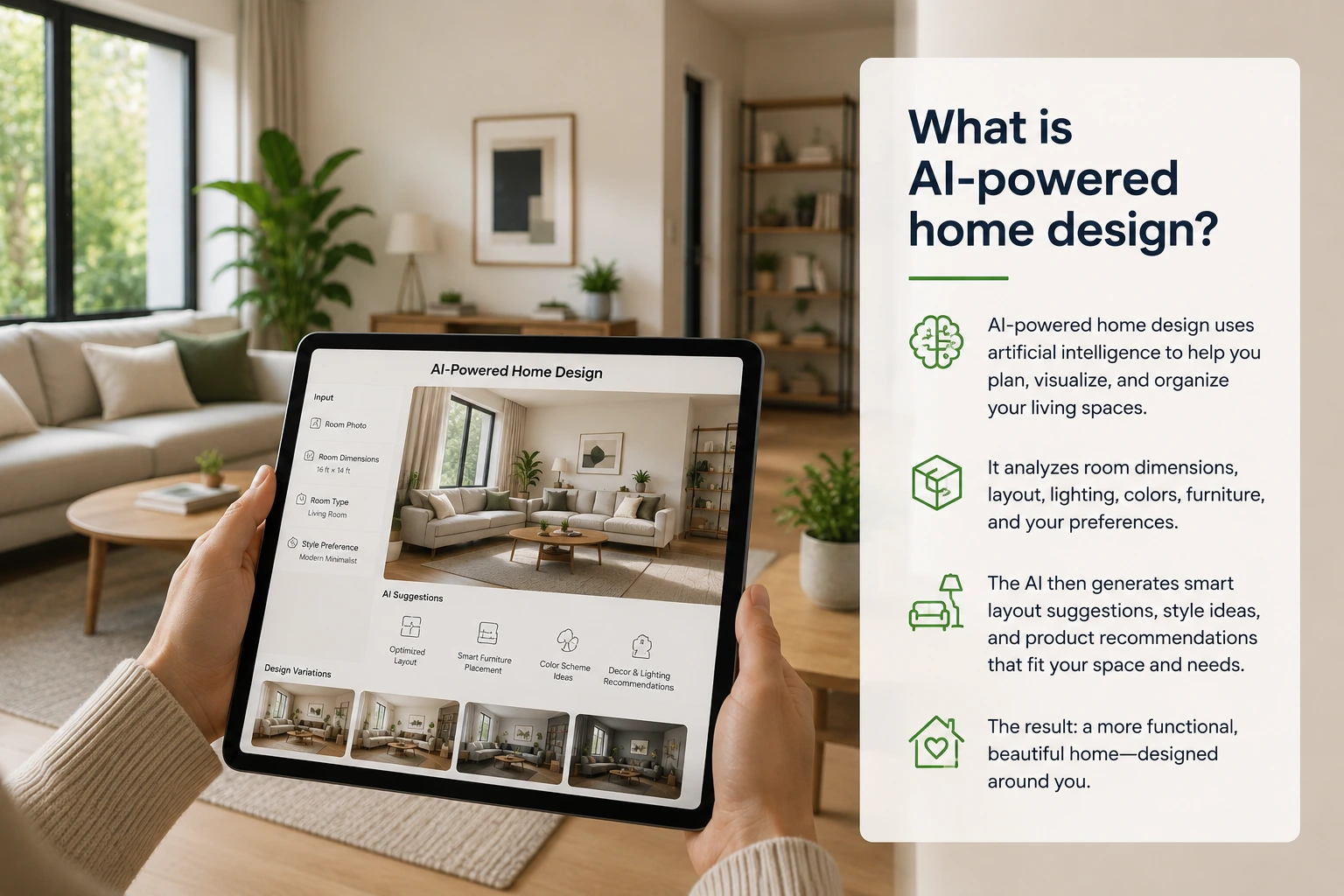
AI house designing is all about using AI tools to help one in creating residential designs, space arrangement, furniture setting, and house organization. AI can analyze room sizes, images, plans of premises, pieces of furniture, colors, illumination, and user needs depending on a particular tool.
People may take photos of their living rooms or bedrooms and order changes in accordance with a particular style (minimalistic, Scandinavian, industrial, modern, etc.) or request an AI system to make recommendations as to where to put their furniture or suggest ideal options for the room.
Businesses that create these solutions usually have to employ varying approaches which involve some combination of AI technology, computer vision, data handling, and user interface design. Cleveroad, as a well-established software development company, would help enterprises design AI-based home design systems that meet the end user's specific requirements.
Improving accessibility in interior design
An enormous benefit of using AI is how accessible it is. The field of design usually requires a lot of resources and time; these tools, however, can ease the process for many.
One can easily prepare multiple designs of a bedroom and see which ones are the most suitable to implement. There is no need now to rely on one's intuition about the appropriateness of this wallpaper or furniture.
It is very helpful for those who have an idea of improving their interiors but cannot name the style they wish to implement. AI-generated designs can provide them with the necessary visuals based on their vague idea.
Utilizing space efficiently
AI is useful in ways not related to design; it helps optimize space usage in homes that do not have enough of it. This is particularly important for small apartments and homes.
AI solutions help you gather data about the room sizes and suggest how to arrange your space conceptually to maximize it functionality-wise. As an example, a small apartment may have to function as a living room, dining hall, and office.
Smart systems keep in mind the dimensions of the furniture, space around it, available storage spaces, and functional areas of your apartment. They can recommend placing a desk somewhere it is more convenient to the light, changing the design of the tools in the house, etc.
Getting a sense of changes before taking action
Issues related to home improvements are often uncertain. The couch may look good online but may turn out to be huge in a room. The shade of paint may also be completely different after it is applied to the wall.
AI-supported visualizing technology helps eliminate this uncertainty. The generative AI technology can help prepare realistic images of the refurbished premises, while augmented reality techniques show how furniture and décor will look in a room.
This gives clients the opportunity to consider different alternatives before making a decision about a purchase or renovation. In addition, this technology enhances customer satisfaction when it comes to home furniture and remodelling.
Designing spaces that are more personalized
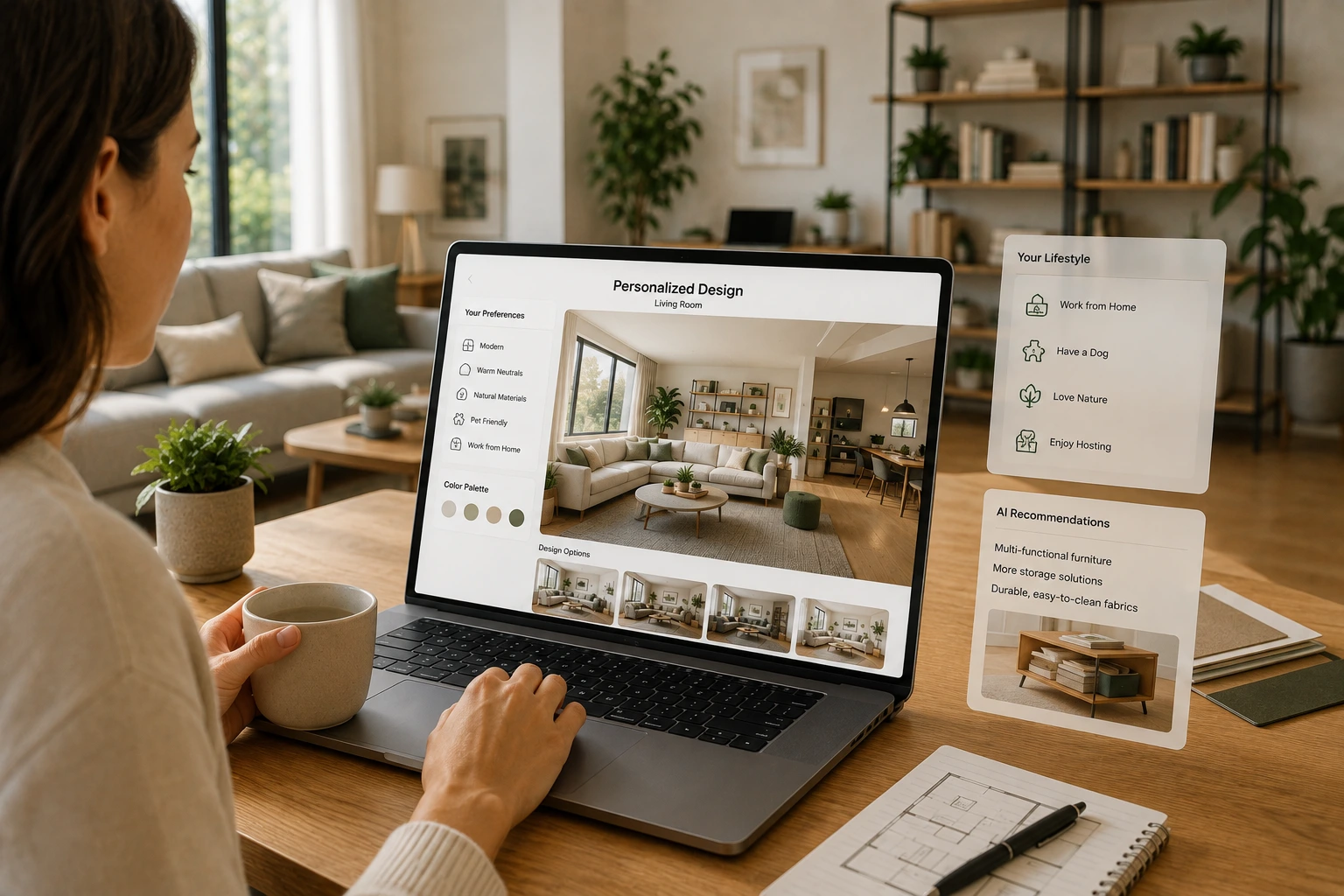
An ideal home design has to express the needs of the inhabitants of the house. AI can assist generate practical designs based on daily rituals and preferences of the family members.
Thus, a family with kids requires a lot of storage space and resistant materials, while a person who works from home would like to create an ergonomic work environment. Someone who entertains guests often can benefit from comfortable furniture and furniture that can be used for multifunctional purposes.
The combination of the room information with the users’ preferences allows AI tools to create more personalized recommendations based on particular individuals’ habits.
Helping people working in the field of designing
Artificial intelligence is currently becoming more useful for architects and interior designers. AI will aid in expediting development of early ideas, visualizations, and communication.
The design experts may come up with a number of different design ideas quickly and use them for communication purposes. This, in turn, allows the expert to understand what the client wants more easily and helps avoid mistakes on the planning stage.
Nonetheless, AI still has its limitations. Generated designs may not account for such parameters as budget, sizes, requirements, construction principle, or installation challenges.
The future of AI-powered home design
The advancement of AI-related technologies have improved the field of home design rapidly. The developing solutions, powered by smart-home technologies, augmented reality, and computer vision, are becoming ever more interconnected.
The emerging platforms may assess the interior space of a house, design layouts, choose furniture, give cost estimates and create realistic images.
AI will not change one's taste or creativity, but will equip people with better tools for creativity exploration, making choices, and efficient interior design.
Author Bio
Yuliya Melnik is a technical writer at Cleveroad, a software development company that offers AI-assisted development services. She likes to write content that makes complex concepts seem straightforward and encourages readers to be creative through vivid and meaningful narratives.


.png)


